

FHS – What Does It Look Like?

In mid-March, the government published its response to the Future Homes Standard consultation, so we know what it will look like when implementation starts next year, writes Paul Booth, the technical director at AluK.
Having taken part in the consultation, we were amongst the first to have sight of the new standard. From an aluminium perspective, it is broadly good news.
The notional U-Values for new build are staying at 1.2W/m2K, which is very achievable in aluminium for all but the very smallest windows even without triple glazing, rather than the 0.8 which many had feared. This looks like a pragmatic approach by the government. It possibly reflects a desire not to increase the cost and/or embodied carbon of a building by requiring triple glazing almost everywhere.
However, there will be a move away from how that 1.2 U-value has to be calculated. Until now, calculations could be based on the standard calculation model (ie 1230 x 1480 standard size) but from 2027 onwards, they will have to be based on the actual size and configuration of each individual window, to arrive at an area weighted average.
Technically, that is a straightforward task for us here at AluK, since our estimating software already calculates the whole window U-values using the frame U-value data we input it at the time of estimating the job. And of course, the accuracy and reliability of our calculations is underpinned by the fact that, unlike many other systems companies, all the frame Uf data we input is validated by third party Notified Bodies.
Window size calculations
Switching to actual window size calculations is clearly intended to help address the gap between theoretical and real-life building performance. That’s certainly something we support. But the challenge for us and for the whole industry, is the fact that, from next year, calculations will have to include the cills, couplers and add-ons as well as the frame. That will significantly multiply the amount of Uf data required. Currently, a system with three opening sash and four frame options requires 12 simulations to obtain the Uf data. From next year, once we have to add in three coupler options, four cill options and two add-ons, that will require 108 simulations – just for one product!
As you would expect, we’re already planning a schedule so that we can get all the required AluK simulations done by 2027.
Despite the challenge, AluK remains a proud supporter of the sustainable, low carbon objectives which drive the Future Homes agenda. Once the new regulations are in force, new homes will emit on average 75% less carbon than those built as recently as 2013 and crucially will be less reliant on fossil fuels, cheaper to run and more energy secure.
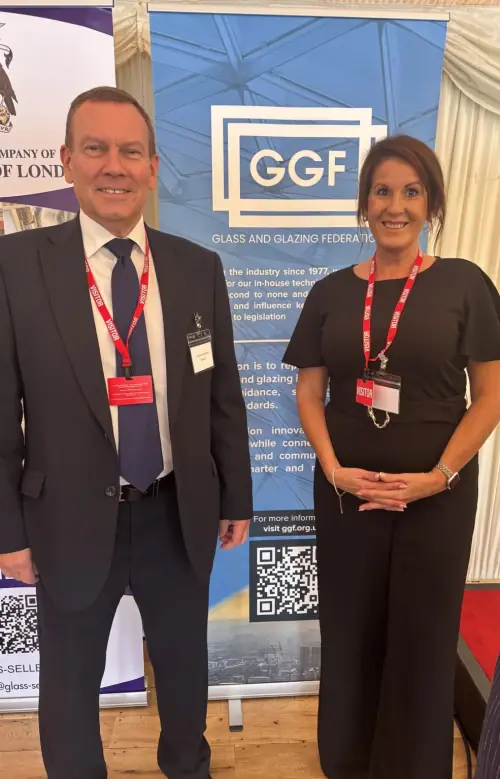
Picture: There has been a cautious welcome for the Future Homes Standard from AluK’s Paul Booth.
More To Read
Crippling Inflation Erodes Home Improvers’ Wages

Sweater Weather Brings Sweeter Forecast

Frame Fails That Don’t Get The Rain Away