

Rehau Price Rocket As Energy Crisis Bites
With firms such as Rehau having to increase window profile costs by 9%, SaveMoneyCutCarbon warns energy volatility is becoming a planning and growth risk for the UK's construction sector.
UK construction firms and construction products manufacturers are bracing for another hit as stalled US-Iran talks send fresh shockwaves through global energy markets, threatening to drive up costs yet again.
This comes at a time when more than half of UK firms are already being forced to raise prices due to soaring utility bills. With the built environment accounting for roughly 40% of the UK’s total energy use, the sector is particularly exposed to price swings that feed directly into materials, site operations and project viability.
SaveMoneyCutCarbon
SaveMoneyCutCarbon, a UK decarbonisation platform, warns that what was once a manageable cost line has now become a full-blown threat to project planning and growth, with geopolitical instability increasingly dictating whether construction firms can hire, invest or even stay competitive.
Price shocks
The stalemate of US-Iran peace talks marks a sharp escalation in global energy risk, turning what had already been a volatile backdrop into a more immediate and unpredictable threat for UK businesses. Rather than a gradual easing of pressures, the UK's construction sector is now facing the prospect of renewed price shocks feeding quickly through fuel, transport and supply chains, with little warning and even less time to react.
SaveMoneyCutCarbon says this kind of sudden geopolitical breakdown is exactly what is reshaping how businesses think about energy. What was previously a longer-term transition discussion is now being accelerated by real-world disruption, as firms look for practical ways to insulate themselves from external shocks, from on-site generation to reducing overall energy demand.
Hitting smaller firms
At the same time, the pressure is becoming more acute for smaller firms, who are not only absorbing rising costs but also navigating growing expectations from customers and supply chains to demonstrate sustainability progress. For many, the challenge is no longer about whether to act but how to do so quickly and affordably in a market that remains complex and fragmented.
In that context, the failure of diplomatic talks is not just another international flashpoint. It is a clear signal that volatility is likely to persist, reinforcing the need for businesses to build resilience into their operations as global instability continues to translate into immediate commercial risk.
Sustainability need
Mark Sait, the CEO of SaveMoneyCutCarbon, said: “The big issue really is about security and the ability to plan. Where once upon a time energy was very stable, you multiplied it by 12 months, put it in your budget and it never moved. I don’t have time for saving the planet, I’m trying to save my business this quarter. Sustainability has moved from a nice to have to a commercial imperative.”
Sait says the latest escalation should be seen as a turning point for UK businesses, where energy resilience is no longer optional but central to staying competitive. As geopolitical tensions continue to drive market volatility, construction businesses that can reduce exposure and regain control over their energy use will be better placed to navigate the uncertainty ahead.
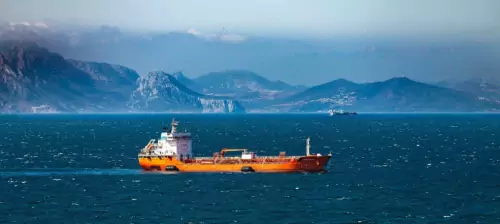
Picture: Tankers stuck at sea are causing energy volatility causing SaveMoneyCutCarbon to say sustainability has move from a nice to have to a commercial necessity.
More To Read