


Money For Nothing
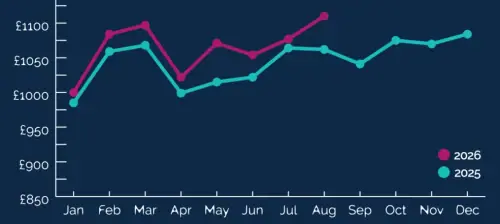
Average earnings for self-employed tradespeople have soared to £1,110 per week. It is not because they work harder or smarter, it’s because there are fewer of them.
This all-time high for labour rates has been reported by Hudson Contract.
This represents a 3.1% increase on July and 4.5% on the same month last year.
Plumbing led the gains, with rates up 10.4% month-on-month to £1,348. Joinery rose 8.9% to £1,247, while steel and timber frame contracting climbed 7.6% to £1,102.
Loss of skills
Commenting on the figures, Hudson Contract’s managing director Ian Anfield said: “Rates remain strong not because the sector is booming but for structural reasons reducing the supply of skilled labour.
“These include the Construction Leadership Council's removal of 'grandfather rights', which has pushed out large numbers of experienced tradespeople; the lingering effects of Brexit and the loss of skilled EU operatives; and the new Right to Work rules expanding the number of workers now declared to be illegal.”
More hours worked
Anfield added: “More generally, households have been more cautious with money this year, so fewer subbies took holidays during August and worked more hours. Also, the dry weather meant fewer rain-related delays on sites.
“With tight margins across the sector, the least-skilled and least-productive operators are finding it hardest to get work.”
Do it yourself
“If things continue as they are, we remain confident that the highest-skilled, best-paid subbies will continue to be in demand,” Anfield said. However, the flip side will be what we saw in 2007-08, when firms cut costs by using fewer non-working supervisors and young labourers and improvers, leaving tradespeople to do their own fetching, carrying and tidying up.
“As we know from the last time this happened, it took 10 years to recover, if the industry ever has. Some believe we lost a generation of trades which has added to skills shortages. With cost inflation, tax and minimum wage increases and over-regulation of employment rights, something has to give.”
Hudson Contract tracks average pay for 17 different trades across 10 regions in England and Wales, supplying labour market statistics to the Bank of England to inform policy decisions on skilled labour demand.
Picture: Pay trends graph from Hudson Contract.
Tradespeople are currently taking a high monthly income as the skills shortage gives the opportunity to charge more for their services.
More To Read